- Home
- Understanding Expanding Treatment Options – January 2025
Understanding Expanding Treatment Options – January 2025
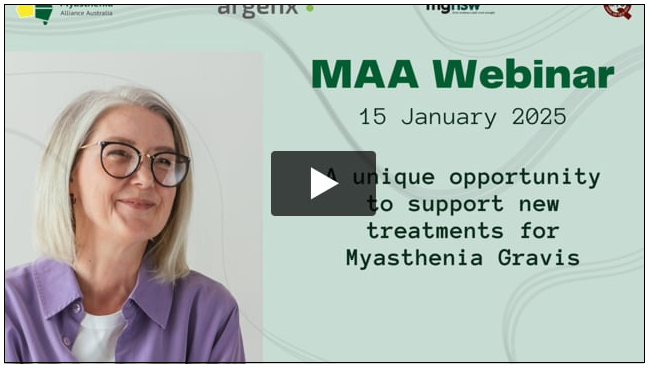
Explore how Myasthenia Gravis is currently treated, the challenges with existing therapies, and why new treatment options are emerging. This blog breaks down complex medical approaches into clear, patient-friendly insights.
Myasthenia Gravis (MG) is a chronic autoimmune condition that disrupts communication between nerves and muscles, leading to muscle weakness and fatigue. With ongoing advances in treatment, it’s essential to understand how MG is currently managed and why newer therapies are being developed.
What Is Myasthenia Gravis?
At its core, MG is a disorder of the neuromuscular junction – the connection point where nerve signals are transmitted to muscles. In most people with MG, antibodies mistakenly target the acetylcholine receptors (AChR) on muscle cells, reducing their ability to respond to nerve signals. The result? Muscles don’t contract properly, causing symptoms like drooping eyelids, difficulty swallowing, and generalised muscle weakness.
How Is MG Treated Right Now?
1. First-Line Treatments
- Pyridostigmine (Mestinon): Often used to manage symptoms, particularly in ocular MG (which affects the eyes).
- Prednisolone (a corticosteroid): Commonly prescribed for generalised MG. It’s introduced gradually to achieve “minimal manifestations” – where symptoms are barely noticeable – and then slowly tapered to reduce long-term side effects.
2. Steroid-Sparing Agents
For many, corticosteroids can’t be used long-term due to their significant side effects. This is where steroid-sparing agents come in:
- Examples: Mycophenolate, Azathioprine, Methotrexate, Tacrolimus, Cyclosporine.
- Purpose: Help reduce or eliminate the need for steroids.
- Considerations: These medications take 6–18 months to become fully effective and come with risks such as infections, liver toxicity, and a small increase in cancer risk.
When Standard Treatments Aren’t Enough
3. Rescue Therapies: IVIG and Plasma Exchange
- Intravenous Immunoglobulin (IVIG):
- Fast-acting and used during severe relapses or when other treatments fail.
- Made from pooled human antibodies.
- Doesn’t suppress the immune system.
- Expensive and resource-limited in Australia.
- Plasma Exchange:
- Removes the harmful antibodies from the blood.
- Very effective for many people.
- Requires hospitalisation and often a central line (like a permacath).
- Like IVIG, it does not induce remission and is a short-term solution.
4. Thymectomy: Surgery as a Strategy
- In patients under 65 with AChR-positive generalised MG, removing the thymus gland (thymectomy) has shown long-term benefits.
- It can reduce the need for steroids and other medications.
- Benefits can be seen as early as three months post-surgery and can last for years.
- Not suitable or effective for all MG types.
5. Options for Refractory MG
When other treatments aren’t effective or tolerated:
- Cyclophosphamide (a chemotherapy drug) is used, often showing results within 3 months. However, it comes with serious risks such as fertility issues, bladder damage, and lowered immunity.
- Rituximab is now widely used, especially effective for MuSK-positive MG. It’s generally well-tolerated and given as an infusion every six months, though less effective for AChR-positive MG.
Why We Need New Therapies
While current treatments have transformed MG management, they often come with a cost—long delays in effectiveness, significant side effects, and short-lived symptom relief. That’s why researchers and clinicians continue to look for newer, more targeted therapies that:
- Work faster
- Cause fewer side effects
- Lead to long-term remission
- Offer personalised treatment options based on the type of MG
In Summary
Living with MG means navigating a complex treatment journey. While we’ve come a long way with effective therapies like steroids, immunosuppressants, IVIG, and surgery, not all patients respond the same way. New treatments aim to fill these gaps, providing more options and hope for people with this challenging condition.
Whether you’re newly diagnosed or have been managing MG for years, understanding your options empowers you to have more informed conversations with your healthcare team.

Please make a donation so that we can continue to provide support for Myasthenia Gravis in Queensland.
Make a Donation-
Like Us on Facebook and spread the word to raise awareness of MG.
-
Join our MG discussion forum on Facebook.
-
Join our MG Carer's discussion forum on Facebook.
-
Follow us on Instagram and help shine a light on Myasthenia Gravis awareness ac…
-
Connect with MGAQ on LinkedIn and support awareness, advocacy, and community co…